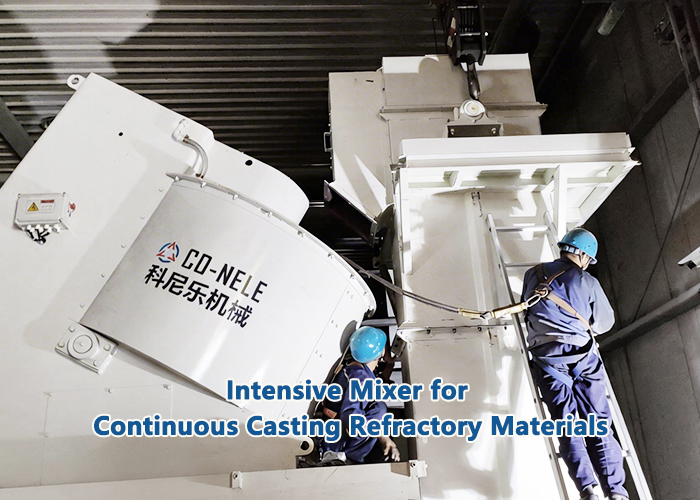
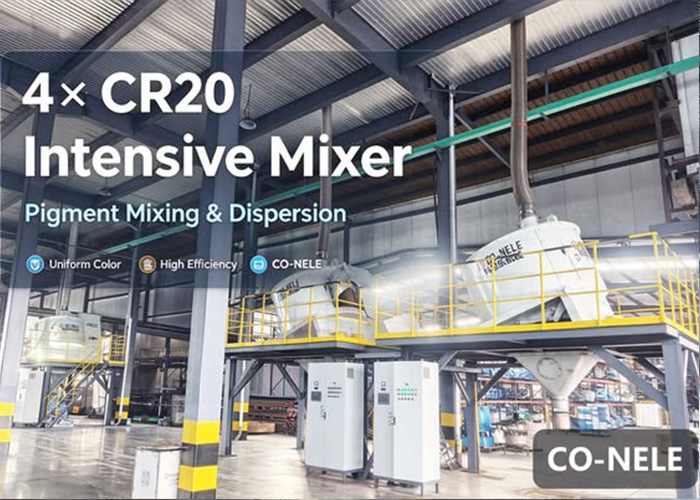
High-Efficiency Mixing Technology for Tundish, Nozzle, and Slide Gate MaterialsThe best mixer for continuous casting refractory materials is an intensive mixer with a high-speed rotor and rotating pan.This mixing technology provides strong shear force, ensuring uniform dispersion of fine powders, binders, and graphite additives used in tundish dry vibratables, nozzle fillers, and slide gate refractories.Compared with conventional mixers, intensive mixers deliver:·higher mixing uniformity·faster mixing cycles·improved refractory density·better flowability and casting stabilityFor medium-to-large refractory plants, a 1500L intensive mixer is commonly used to ensure stable batch quality.Why Mixing Quality Matters in Continuous Casting Refractories?Continuous casting refractory materials require extremely precise mixing because their formulations contain components with very different particle sizes and densities, such as:·alumina or magnesia aggregates·ultra-fine powders·graphite additives·organic or inorganic binders·anti-oxidation materialsIf these materials are not mixed uniformly, manufacturers may experience:·powder segregation·uneven binder distribution·unstable flow performance·reduced refractory lifespanTherefore, high shear mixing equipment is essential for refractory production.What Is an Intensive Mixer?An intensive mixer is a high-performance mixing machine that combines:·a rotating mixing pan·a high-speed rotorThe rotor applies strong shear energy while the rotating pan ensures continuous material circulation.This structure produces three-dimensional mixing motion, allowing particles to interact more effectively.Key functions include:·breaking powder agglomerates·dispersing fine additives·improving binder coating·producing homogeneous refractory mixesAdvantages of Intensive Mixers for Refractory Production1. High Shear Mixing EnergyThe high-speed rotor generates strong shear forces that efficiently disperse micro-powders and graphite particles.This is especially important for carbon-containing refractory formulations.2. Faster Mixing CyclesTypical mixing cycles range from 2 to 5 minutes, depending on formulation.Shorter cycles improve overall production efficiency.3. Excellent Material HomogenizationThe rotating pan continuously moves material through the mixing zone, ensuring uniform distribution of all components.This leads to consistent refractory properties in every batch.4. Suitable for Abrasive MaterialsRefractory aggregates are highly abrasive.Industrial intensive mixers are designed with:·wear-resistant liners·hardened mixing tools·heavy-duty drive systemsThese features ensure long service life.Applications in Continuous Casting Refractory ProductionIntensive mixers are widely used for manufacturing various refractory products used in steel plants.·Tundish Dry Vibratable MaterialsUniform mixing ensures stable density and proper sintering behavior.·Slide Gate Refractory PlatesHomogeneous material distribution improves wear resistance and service life.·Nozzle Filler SandsProper mixing prevents clogging and ensures reliable opening during casting start-up.·Carbon-Containing Refractory MixesUniform graphite dispersion improves oxidation resistance and thermal shock performance.Recommended Mixer Model for Refractory PlantsCR24 Intensive Refractory MixerTypical specifications:Output capacity: 1500L per batchMixing technology: high shear intensive mixingMixing cycle: 2–5 minutesSuitable materials:·magnesia carbon refractory·alumina refractory·continuous casting materials·refractory castables·dry vibratablesThe CR24 model is widely used in medium and large refractory manufacturing plants.Production Process Using an Intensive MixerA typical refractory mixing workflow includes:1. Raw material feeding2. Fine powder dosing3. Intensive high-speed mixing4. Binder addition5. Final homogenization6. Batch dischargeThe intensive mixer ensures each step maintains stable material movement and uniform composition.Benefits for Refractory ManufacturersBy adopting intensive mixing technology, refractory producers can achieve:·improved product consistency·reduced material waste·higher production efficiency·improved refractory performance in steel plantsThese advantages help manufacturers remain competitive in the global refractory market.Frequently Asked Questions -What mixer is best for refractory materials?An intensive mixer is widely considered the best choice for refractory production because it provides high shear mixing and excellent material homogenization.-Can intensive mixers handle magnesia carbon materials?Yes. Intensive mixers are commonly used to produce magnesia carbon bricks and carbon-containing refractories, where graphite dispersion is critical.-What is the typical mixing time for refractory materials?Most refractory mixes require 2–5 minutes per batch depending on formulation and capacity.-What capacity mixer is suitable for refractory plants?Common industrial capacities include:500L,750L,1000L,1500L,2000LMedium-size refractory factories often use 1500L mixers.-Why Choose CONELE Intensive Mixers?CONELE specializes in industrial mixing technology for refractory manufacturing.CONELE intensive mixers are widely used for:·magnesia carbon bricks·continuous casting materials·refractory castables·slide gate plates·tundish dry materialsWith robust design and advanced mixing technology, CONELE mixers help refractory producers achieve high efficiency and stable product quality.ConclusionContinuous casting refractory materials require precise control of mixing quality to ensure stable performance in steel production.An intensive mixer provides the high shear energy and uniform mixing necessary for advanced refractory manufacturing.For refractory producers seeking improved production efficiency and consistent material quality, intensive mixing technology is an ideal solution.Contact CONELE for Refractory Mixing SolutionsIf you are planning to upgrade your refractory production line, CONELE engineers can provide customized mixing solutions for your plant.
Tags:
Intensive Mixer for Continuous Casting Refractory Materials
refractory mixer
conele mixer
Back To The List